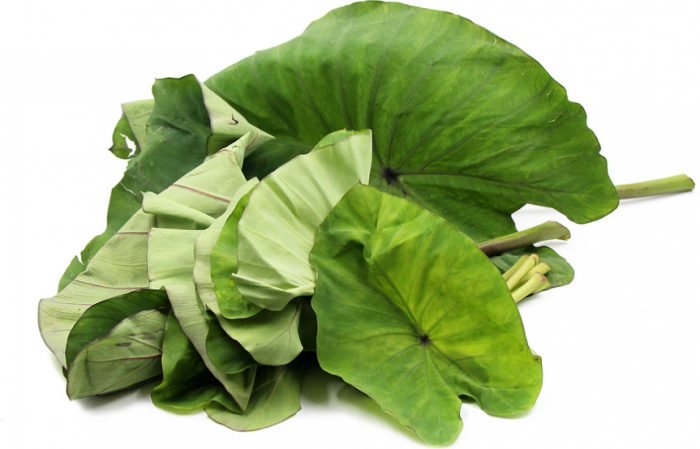
Taro Leaf
Taro leaves must be cooked before consumption and are best suited for applications such as steaming, frying, sautéing, and boiling. Gloves should also be worn when preparing the leaves to avoid skin irritation. Taro leaves are commonly found in the authentic Hawaiian dish known as lau lau, which consists of wrapping chicken, pork, or salted butterfish in the leaves and then steaming in a makeshift underground oven known as an imu. They can also be spread with a spiced chickpea paste, rolled, steamed, sliced, and deep fried or rolled up tightly and tied into knots and simmered in coconut, red chili, tamarind, coriander, and garlic. Taro leaves make an excellent accompaniment to curries and dishes containing coconut milk. Filipinos use both dried and fresh Taro leaves in a dish called laing, which is a stew that can include shrimp or crab and often paired with steamed rice. Taro leaves pair well with aromatics such as garlic, ginger, and onion, meats such as fish, chicken, pork, and beef, dried shrimp, coconut milk, fish sauce, chilies, sweet potato, chickpeas, and tomatoes. They will keep for a couple of days when stored in a perforated bag in the refrigerator.